


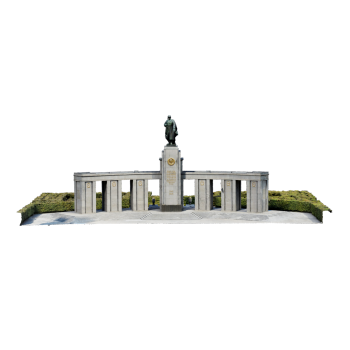
Berlin Tilgarten Soviet War Memorial
It was established to commemorate the Soviet soldiers who sacrificed their lives in the Battle of Berlin in 1945. The Tilgarten Park, located in the center of Berlin, is one of the three Soviet war memorials in the city, the other two being located in Trepto Park and Pankov. Built by the Soviet Red Army in 1945, it is the first Soviet monument in Berlin. It is not only a commemoration of the Soviet soldiers who sacrificed their lives in World War II, but also a tribute to the central role played by the Soviet military in the war. The design has a strong commemorative significance, aiming to remind people not to forget history and cherish peace. It is one of the most important commemorative buildings in Berlin.

The Queen Louis Memorial
A commemorative building located in Svensk, Germany, built in honor of Queen Louis of Prussia. She was the wife of King Frederick William III of Prussia, known for her beauty and tragic early death. This monument is a typical representative of the Romantic period in the 19th century, showcasing deep nostalgia and respect for the queen. It was once part of East Prussia, but now belongs to the Kaliningrad Oblast of Russia. The design blends Gothic and classical elements, reflecting the architectural style and artistic aesthetic of the time. Not only is it a personal memory of the Queen, but also a symbol of German history and culture.

Lessing Memorial
Tilgarten, located in Berlin, was designed and installed by Otto Lessing. Established in memory of the famous German poet, playwright, and critic Gotthold Ephraim Lessing. Not only renowned for his literary creations, but also highly respected for his contributions to drama theory and religious philosophy. His works and ideas have had a profound impact on German culture and the Enlightenment movement, particularly his reflections on civic self-awareness and contributions to drama. In addition, Vienna's Jewish Square also has a memorial statue of Lessing, which has been standing there since 1981 and was created by Sigfried Shahruks.

German Goslar Hunter Memorial
A commemorative building located in Goslar, Germany, close to the defense works of the old city. To commemorate the members of the Goslar Hunter Corps who sacrificed their lives in two world wars, while also reminding the living of the importance of history and peace. It is not only a tribute to the lost lives, but also a warning to the living, prompting people to reflect on the painful consequences of war. It is an important cultural and historical landmark in the city, where commemorative events are held every year to honor the brave warriors who sacrificed their lives for the country and educate the new generation about the cost of war and the value of peace.

Joanna Baillie Memorial in South Lanarkshire, Scotland
A monument located southeast of Bothwell Parish Church in South Lanarkshire, Scotland. It was established in memory of Scottish poet and playwright Joanna Baillie (1762-1851). She was an innovative writer during the Romantic period, with works including poetry, drama, historical and religious writing, as well as autobiography and other forms. This monument was built around 1899 and features an Italian style design with a square plan and arcade, built on a polished granite pedestal. It is not only a tribute to an outstanding female writer, but also a celebration of the local cultural history.

Lisbon National Ancestral Hall, Portugal
Located in Lisbon, the capital of Portugal, it is a monument of significant historical and cultural significance. Originally served as the Church of Saint Gracia. Built in 1682, it was officially named the National Ancestral Hall in 1916. It is an outstanding representative of the Portuguese Baroque style, and its magnificent dome was not completed until 1966, making it one of the longest lasting architectural projects. The interior houses the most outstanding figures in Portuguese history, including renowned writers, politicians, military leaders, and serves as an important place to commemorate these national heroes. In addition to its historical and cultural value, it is also a landmark building visible in many tourist attractions within Lisbon city
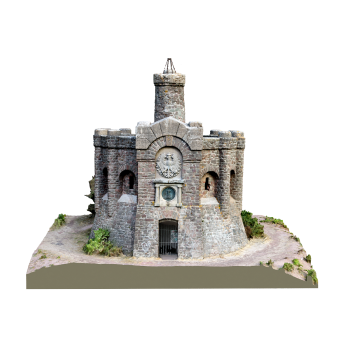
Prussian Tower Monument
The Avilsbach wine region, located near Trier, Germany, is a tower shaped structure situated in a prominent position above the vineyards, built in 1910. The charm of the surrounding scenery is not only an observation deck, but also a monument commemorating Prussia's contribution to promoting the Moselle Valley wine industry and its then field director. Not only is it a popular destination for wine enthusiasts and tourists, but it is also a symbol of local natural beauty and cultural heritage. Tourists can enjoy the magnificent scenery of vineyards and surrounding countryside here, and experience the rich history and cultural atmosphere of the region.
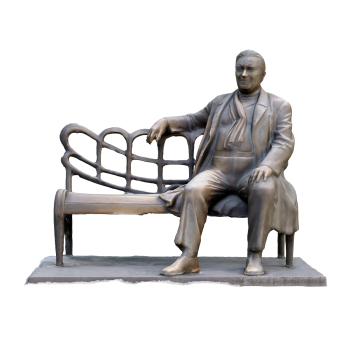
The Utsov Monument in Ukraine
The Utesovmonument is a monument located in Odessa, Ukraine, created by Pixelated Realities to commemorate the famous Soviet singer Leonid Utesov. He is one of the most popular and influential singers in the former Soviet Union in the 20th century, and his music works are widely appreciated. This monument is a tribute to his musical contributions and a part of Odessa's rich cultural heritage. A public space located in the center of Odessa, becoming a popular attraction for local residents and tourists.
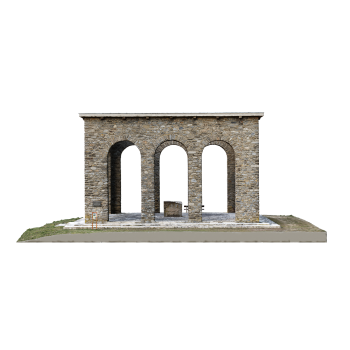
Vienna Merge Monument
The merger monument is located on Heldenplatz Square in the center of Vienna, Austria. This monument was built to commemorate the Anschluss event of 1938, the historical event of Nazi Germany's annexation of Austria. Created by Austrian sculptor Alfred Hrdlicka, it was unveiled in 1988. The intention is to remind people of past history and warn future generations not to repeat such mistakes. Its existence is to commemorate those who were persecuted and died during the Nazi era, as well as the Austrian people's reflection and memory of this history.

The Tiberius Monument at the Niejmegenwalhof Museum in the Netherlands
The Tiberius Pfeiler Monument in Nijmegen is a historical monument located in the Dutch city of Nijmegen. This monument was built in memory of Emperor Tiberius of the ancient Roman Empire. Built in the 1st century, it is one of the ruins of the Roman era. It is built of stone and sandstone, with a height of about 4.5 meters. The monument was originally part of a temple, dedicated to commemorating the achievements and reign of Emperor Tiberius. It is the largest and oldest Roman monument in the Netherlands, and can now be seen at the Warhof Museum.

Carvings from the Byzantine Empire period titled 'Talisman Stone in Memory of Scandinavian Mercenaries'
The large talisman from Sweden is a classic example of how to preserve past stories. This talisman monument was carved around 1050-1100 AD to commemorate a father and son who were Scandinavian mercenaries serving the Greek Byzantine Emperor. It is currently housed in the Ashmolean Museum in Oxford. The Eastern Roman Empire was originally the eastern half of the Roman Empire and was more inclined towards Greek culture. After splitting from the Western Roman Empire, it gradually developed into a country based on Greek culture, Greek language, and later Eastern Orthodoxy. Greece was the core component of the Byzantine Empire and shaped the cultural identity of modern Greece.

Popular Models


Honey Badger (3D animated model)
192 View

Guinea fowl (3D animated model)
163 View

Wild Goose (3D animated model)
185 View

Red Fox (3D animated model)
153 View
Random Model

Suzuki Boulevard M109R BOSS 2019
1126 View

Platypus 3D Model Animation
849 View

Vintage Green Metal Table Lamp
524 View

McLaren F1 1993
829 View

Persimmon
705 View


Peacock butterfly 3D animation model
755 View

Pendant
649 View